In this guide
What should you prepare before requesting a quote?
How do you turn artwork into a usable development brief?
Which material and decoration choices matter most?
How should you compare custom plush quotations?
How should you review the first plush sample?
What should final sample approval actually mean?
What quality and safety evidence should a buyer request?
How do packaging and delivery affect the project?
A practical internal handover before placing the order
Start your custom plush project
Ordering custom plush toys starts with a clear product brief, followed by a quotation, a physical sample and documented approval before bulk production. The most useful brief explains the character, intended audience, size, materials, quantity range, destination market and packaging. A beautiful drawing is a starting point; it is not yet a complete manufacturing specification.
For a brand or licensing team, the difficult part is often translating “make it look like our character” into decisions that a sample developer, purchaser and quality inspector can interpret consistently. A raised eyebrow, a narrow neck or a long fabric pile can change the finished expression even when the colors are correct.
This guide explains what to prepare, how to compare proposals and what to inspect before approving a custom plush sample. It is written for commercial projects rather than single-piece personalized gifts. The checklists are buyer planning tools: agree the actual specifications, inspection methods and acceptance criteria with your manufacturing partner.
What should you prepare before requesting a quote?
Understanding how to order custom plush toys starts with preparing a clear project brief covering your design, intended use, quantity, materials and packaging requirements.Start with the intended product application. A mascot handed out at an event, a character sold in a museum shop and a collectible displayed by adult fans may need different sizes, details and packaging. Explain where the product will be used and who will receive it before selecting decorative features.
Your opening inquiry should answer the following questions. If an answer is not available, identify it as a decision to discuss instead of letting the supplier guess.
| Brief item | What to provide | Why the buyer should decide it |
| Character | Artwork you own or are authorized to use | Establishes the design reference |
| Application | Retail merchandise, promotional gift or another defined use | Guides practical product choices |
| Audience | Intended user and age group | Informs design and safety review |
| Size | Height or another measurement, with a clear measuring method | Makes quotations comparable |
| Quantity | Estimated total and split by design or color | Reveals the actual production scope |
| Materials | Hand-feel preference and essential details | Reduces conflicting assumptions |
| Market | Destination country and retailer requirements | Starts the applicable requirements discussion |
| Packaging | Individual pack, labels and any display needs | Connects the toy to the delivered product |
Include the date the goods must be available for your campaign or launch. Distinguish that date from the desired factory dispatch date. Sampling, approvals, production, inspections and transport each need their own place in the schedule.
Give the supplier decision priorities
Mark the character features that cannot change. These might be the eye spacing, head-to-body proportion or a distinctive color boundary. Then identify flexible details, such as a removable outfit that could become a sewn-on fabric element if the original construction is impractical.
This creates a useful conversation about trade-offs. “Keep the face recognizable while simplifying the accessory” is more actionable than “make everything premium but reduce the price.”
How do you turn artwork into a usable development brief?
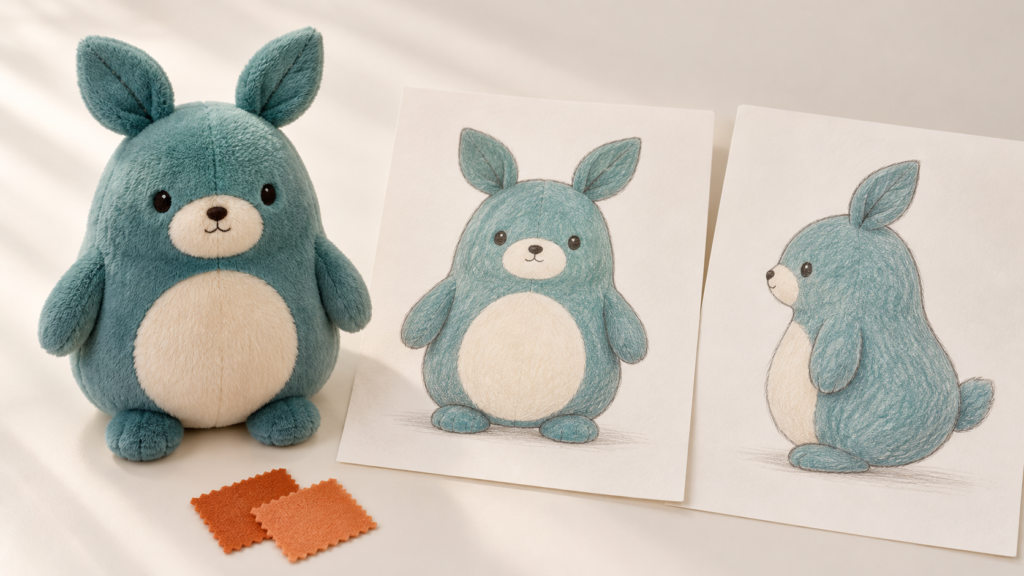
A front view rarely explains the whole product. Add side and back views when available, especially for hair, tails, clothing and asymmetric details. If you have only one image, ask the developer to identify the missing decisions before interpreting them.
Use annotations rather than relying on long email descriptions. Mark where a color starts, whether an element should be flat or three-dimensional, and whether a feature is decorative or functional. A simple annotated sketch can be more useful than a polished image with ambiguous geometry.
“Twenty centimeters tall” can mean seated body height, standing height or overall height including ears. Specify which one you mean. Record other dimensions only where they affect appearance, packaging or use. Avoid prescribing a tolerance without checking whether it is realistic for the chosen soft construction.
For colors, provide a reference system or an approved physical reference, then confirm the actual fabric and thread selections. A screen preview cannot settle every color question. Different materials can appear different under different lighting even when they are intended to represent the same brand color.
Treat concept images as concepts
AI artwork and rendered mockups can communicate an idea, but they may contain inconsistent seams, hidden shapes or details that change between views. Ask for an agreed interpretation of those details. Do not approve production from a rendering alone, and make sure your team has the necessary rights to the character and artwork.
Which material and decoration choices matter most?
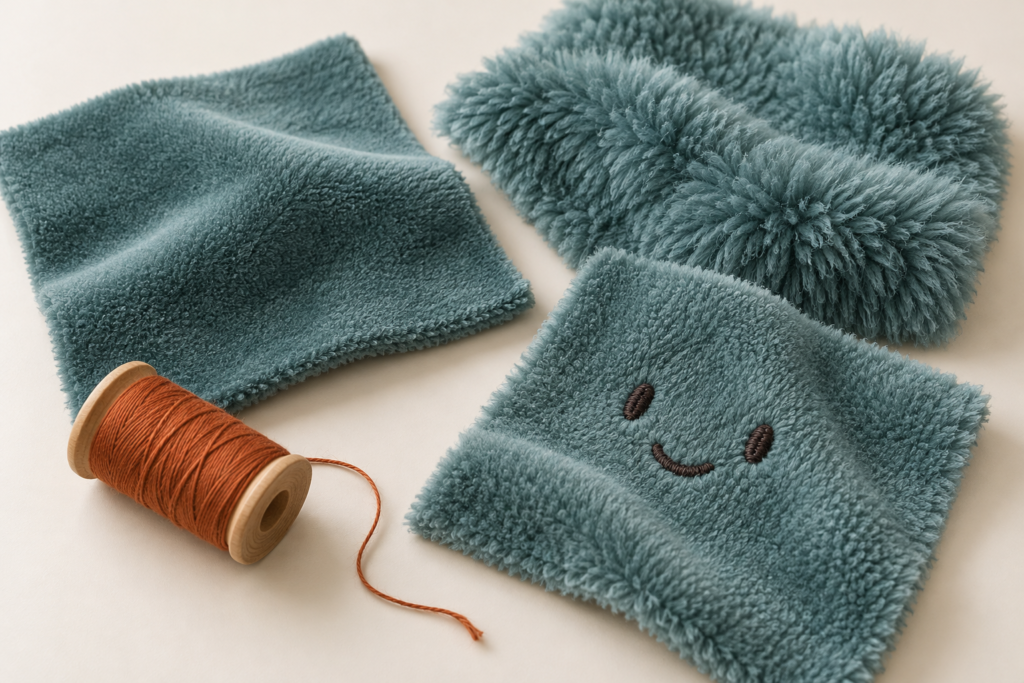
Evaluate materials against the character and the intended use. A fluffy finish can soften a silhouette, while a shorter surface may make small embroidered features easier to see. Neither choice is automatically better: request a physical sample of the proposed combination.
Review the face at the finished size
Small details that look clear in enlarged artwork may merge or disappear on the sample. Review the actual embroidery, print or fabric application at the intended size. Ask whether fine lines should be simplified and whether any changes affect the character approval requirements.
If the design includes separate components, review their construction and attachment with the intended user in mind. Do not assume that embroidered features alone make an entire toy suitable for every age group. Safety depends on the complete product and its applicable requirements.
How should you compare custom plush quotations?
Compare the same specification across suppliers. A low unit price is difficult to interpret if one quotation excludes packaging, another uses a different size and a third assumes a single design instead of several variants.
Request separate explanations of development charges, unit pricing, packaging, testing or inspection arrangements, and transport responsibilities. Ask which assumptions could change after sampling. The objective is to understand the quotation, not to force every development unknown into a fixed promise immediately.
| Quotation question | Useful clarification |
| What does the sample charge cover? | Initial development, included revision scope and excluded changes |
| What quantity does this price assume? | Total order, per-design quantity and color split |
| What material is quoted? | Named sample or material reference rather than “good quality” |
| What is included in packaging? | Labels, individual packs and shipping cartons |
| Which checks are included? | Factory checks, third-party testing or shipment inspection scope |
| What starts the production schedule? | The specific approvals and commercial conditions required |
There is no responsible universal MOQ or delivery promise for every custom plush project. Ask how material sourcing, design variation and production setup affect your particular order. If your quantity is undecided, provide a range and ask for a comparison based on the same product specification.
To discuss the development route for your artwork, explore our custom plush toy development options.
How should you review the first plush sample?
Review the sample in stages. First assess recognition: does it read as the intended character from the front, side and back? Next assess construction and hand feel. Finally check the details that affect selling, packing or using it.
Compare against one current reference
Create a review sheet containing the sample version, dated photographs and the current artwork reference. Ask stakeholders to comment on that same version. This avoids a licensing team approving one face while a purchasing team quotes an older design.
| Review area | Buyer check | What to record |
| Character identity | Expression and overall proportions | Photos of approved and unresolved details |
| Dimensions | Agreed measuring points | Measurements and accepted variation |
| Materials | Surface, color and hand feel | Material references and any substitutions |
| Construction | Seams, shape and filling distribution | Visible issues and required corrections |
| Decoration | Placement, readability and finish | Artwork version and detail photos |
| Packaging | Fit, labels and product presentation | A packed sample or agreed packaging reference |
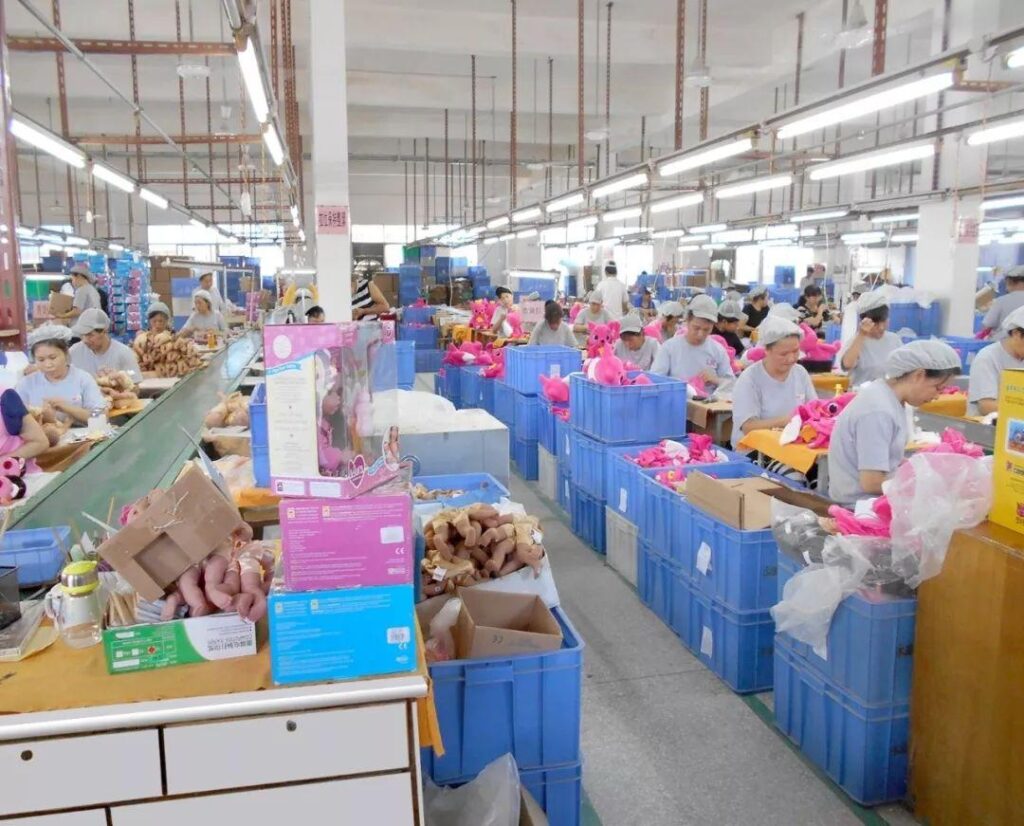
Do not rely only on flattering studio photographs. Request practical views of the back, underside and small components. Where feasible, handle the physical sample before final approval.
Write revisions that can be verified
Replace “the face looks wrong” with a marked photograph showing the area to change. Separate essential corrections from optional preferences and ask whether a revision affects cost, materials or timing.
For example, a hypothetical brand might find that a mascot looks cheerful in its illustration but stern in the sample. The next review could compare the eyebrow angle and mouth position rather than restarting the entire body. This is an illustrative decision method, not a reported WEIMEI customer project.
Ready to discuss your plush brief?
What should final sample approval actually mean?
Approval should identify a specific version and the scope being accepted. Confirm whether the sample represents the intended production materials and construction, and list any items still awaiting approval. A sample accepted for its shape is not necessarily an approval of its label text or retail packaging.
Keep the approved reference with the specification, artwork and revision history. Ask the supplier to confirm which reference production and inspection will use. If the material or construction later changes, establish who must review that change before it is used.
For a licensed character, include the rights holder’s approval stage in the plan. The person paying for the order may not be the person authorized to approve the character’s appearance. Resolve that responsibility before scheduling the release of production.
Also ask how reorders will be handled. Keeping an approved reference makes it easier to discuss differences if a fabric becomes unavailable or a later batch needs a substitution.
What quality and safety evidence should a buyer request?
Separate three questions: does the sample match the design, does production meet the agreed quality criteria, and does the product meet the applicable requirements for its market? These are related questions, but one document rarely answers all three.
For US toy projects, CPSC’s Toy Safety Business Guidance explains that applicable requirements depend on the product. Toys intended primarily for children aged 12 or younger generally require testing by a CPSC-accepted laboratory and a Children’s Product Certificate for applicable requirements, subject to relevant exceptions. Confirm the actual testing and documentation scope for your product; do not treat a supplier’s unrelated report as proof for a new design.
For other destinations, ask the responsible compliance specialist or laboratory to identify the current product-specific requirements. Establish the target market early so changes are not discovered after the design is locked.
Ask what “factory testing” includes
The phrase alone is insufficient. Request the check, the method, the acceptance criteria and the record you will receive. Routine production checks and legally required third-party testing have different roles.
For a shipment inspection, agree which product reference, packaging requirements and order information the inspector will use. Sampling-based inspection evaluates the selected units; it is not evidence that every unit was examined. Clarify who reviews any nonconformity and what must happen before shipment release.
You can also ask about our manufacturing approach when reviewing the proposed production and quality arrangements.
How do packaging and delivery affect the project?
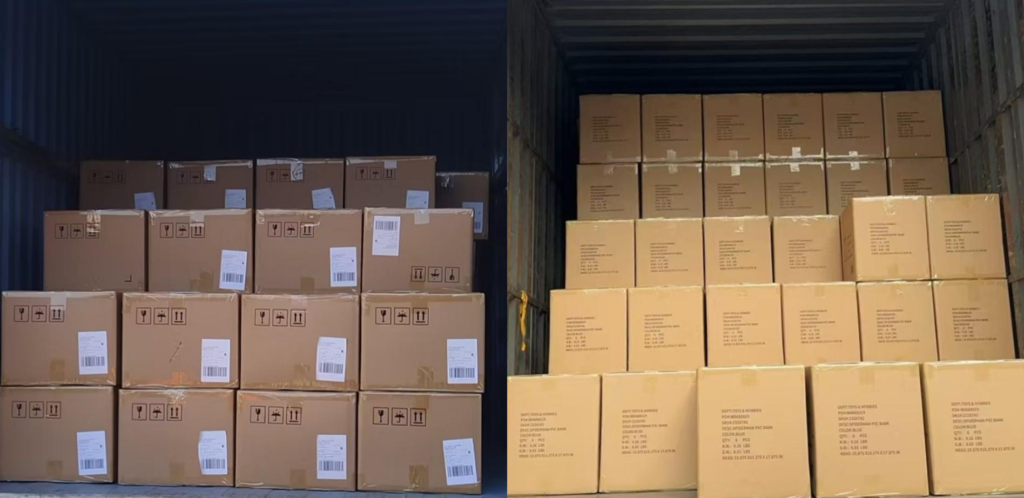
Check the toy inside its proposed packaging. Confirm that the face is presented correctly, protruding features are not forced into an unsuitable position and labels remain readable. If compression is proposed, evaluate a packed and unpacked sample before accepting it for the order.
Agree individual-pack requirements and master-carton information separately. Retail teams may need a specific barcode position, while the warehouse needs correct quantities and identifiable cartons. Both should refer to the same product version and variant list.
Build the delivery plan backward from the required arrival date. Ask which milestones depend on your approvals, which depend on production readiness and which involve transport arrangements. Leave room to resolve a failed check rather than treating the first shipment date as immovable regardless of the result.
A practical internal handover before placing the order
Bring purchasing, design and the person responsible for product requirements into one final review. Check that the purchase specification matches the approved sample and that the quotation still reflects the agreed packaging and quantity split.
Keep a short decision log: what is approved, what remains open, who owns each decision and which changes require a new review. This is especially useful when several people communicate with the factory. One consolidated instruction reduces the risk of production following a superseded email.
If budget reductions are needed, request a revised option and review its consequences explicitly. Do not approve an unspecified “equivalent material” and expect the original sample to remain the unquestioned reference.
Frequently asked questions
Can I start with a sketch rather than a finished design?
Yes, a sketch can start the discussion. Explain the intended use and identify missing views or dimensions. The supplier still needs to confirm the development interpretation, costs and approval stages before a production-ready specification exists.
Is one sample enough to approve a bulk order?
A sample can establish a reference, but it should be connected to agreed specifications and quality requirements. Additional reviews may be needed for changed materials, packaging, multiple variants or unresolved construction issues. Define the approval scope for the actual project.
What affects the cost of custom plush toys?
Size, construction complexity, materials, decoration, accessories, quantity split and packaging can all affect the proposal. Development, testing, inspection and freight may be separate charges. Compare quotations on the same assumptions rather than unit price alone.
Can labels and packaging be customized?
Include those requirements in the brief and ask what can be supplied for your design and quantity. Provide the intended label content and packaging artwork for review. Do not assume a quotation for the toy body includes all retail presentation elements.
Can I use a sample photograph to approve the color?
Photographs are useful for discussion but may not reproduce color consistently. For color-critical projects, agree the reference materials and review physical fabric, thread or finished samples under suitable lighting before final acceptance.
How long does a custom plush project take?
The schedule depends on design readiness, revisions, material availability, quantity, testing and transport. Request a milestone plan with clear starting conditions. A sample estimate should not be mistaken for an end-to-end delivery commitment.
Conclusion
Knowing how to order custom plush toys means looking beyond the unit price. A clear project brief, comparable quotes and an approved sample provide a stronger basis for production. Sampling is not just about seeing your character brought to life—it is about resolving design, material and construction details before the bulk order begins.
Start your custom plush project
WEIMEI TOYS works with brands, IP owners and business buyers on custom toy projects. Share your artwork, destination market, intended audience and product requirements to begin a project-specific discussion. If your quantity or material choice is still undecided, describe your priorities so those questions can be reviewed together.
《How to Order Custom Plush Toys: 6 Steps for Brand Buyers》有1条评论
评论已关闭。