When comparing PVC vs resin figures, start with the product you need to deliver: a display collectible, a handled promotional item or a figure with flexible parts. A flexible PVC compound is worth evaluating where controlled bending matters; a casting resin can be considered for a rigid reproduction. Neither label alone guarantees fine detail, durability or a lower project cost. Ask for the exact material, proposed forming method and a representative finished sample before choosing.
PVC vs resin figures at a glance
| Selection point | PVC proposal | Cast resin proposal |
|---|---|---|
| Needs worth discussing | Controlled flexibility or a specified feel; confirm compound and construction. | Rigid display reproductions; confirm casting resin and construction. |
| Confirm on a sample | Hardness and bending behavior, fine features, paint boundaries and connections. | Thin projections, reproduced texture, painted finish, joints and base fit. |
| Main cost variables | Forming route and molds, quantity per design, decoration, assembly and packaging. | Model and molds, casting and finishing, quantity, assembly and protective packaging. |
Use this as a shortlist, not a material ranking. Both proposals still need a defined material, representative samples and a like-for-like quotation.
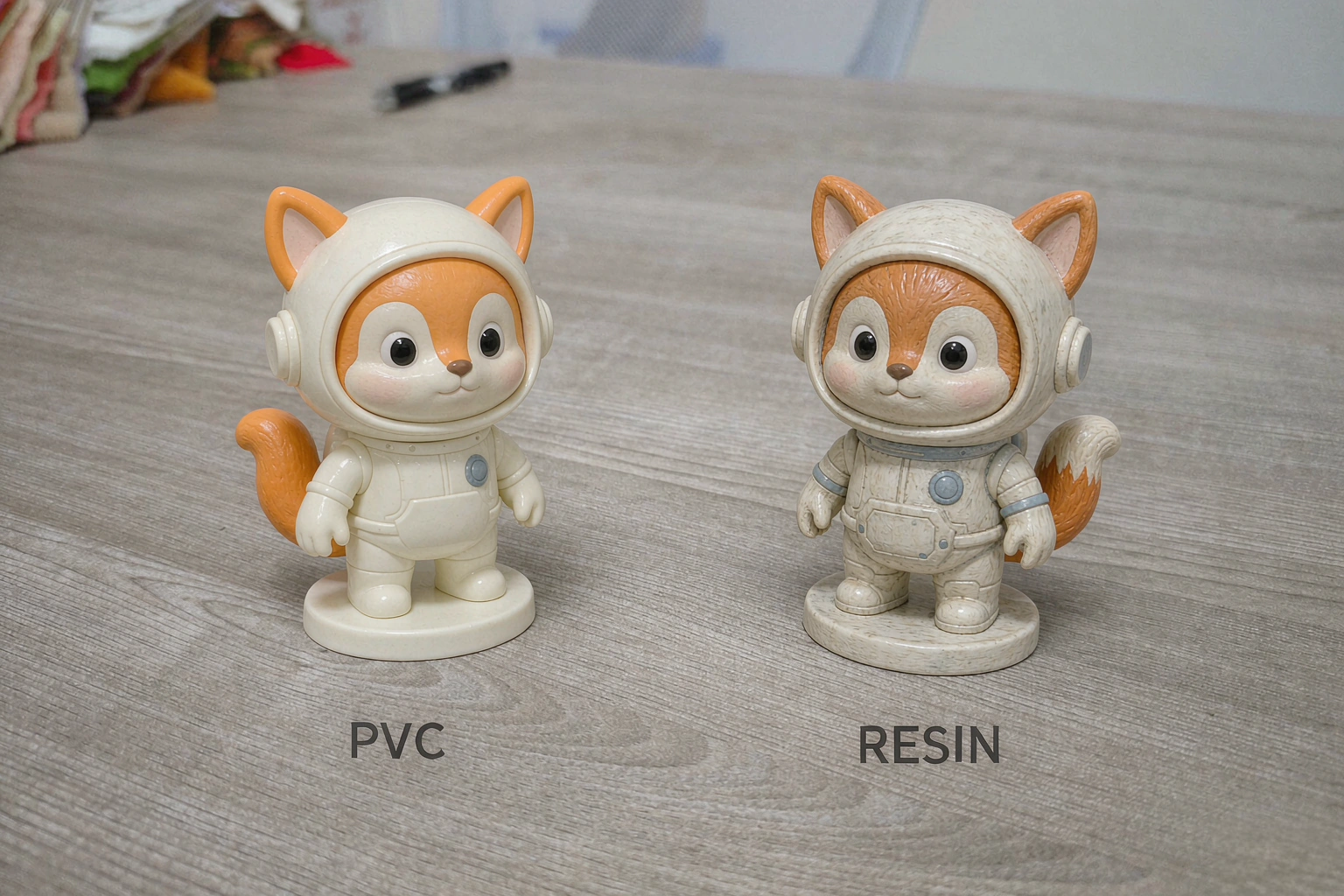
Material names need a precise specification
What are PVC figures?
PVC figures use polyvinyl chloride compounds, which can be formulated with different properties. Teknor Apex explains that additives are blended with PVC resin and that plasticizers help create flexible compounds. [1] Ask which compound and hardness the proposal uses. A picture cannot establish whether a figure will feel rigid, flexible or soft.
Keep material and process separate. “Vinyl” in a toy description is not a complete specification, and “PVC” does not tell you whether the proposed figure is hollow or solid. Ask the supplier to name the forming route and explain the wall construction, part divisions and connections. Our plastic material selection guide covers the broader material brief.
What is a resin figure?
“Resin” also needs clarification. This guide discusses cast resin figures, rather than treating every 3D printing resin as equivalent. Smooth-On describes Smooth-Cast 300 as a casting resin used for reproducing sculptures and making models; its instructions refer to molds and demolding. [2] A cast resin proposal therefore should identify the resin system, mold route, surface finishing and assembly work.
The materials cited here illustrate why specifications matter. They are not a statement that WEIMEI TOYS uses these particular products, or a recommendation of a resin for a children's toy.
PVC vs resin figures by design priority
Evaluate both proposals against the same artwork and dimensions. First identify what cannot change: the silhouette, facial expression, accessory shape or surface texture. Then ask how each proposal will preserve it. A material comparison is useful only when it refers to the figure you intend to approve.
Match detail to a representative sample
Do not assume that a material name guarantees sharper features. Smooth-On lists detail reproduction among the capabilities of Smooth-Cast 300, but that describes one material under its intended processing conditions. [2] For your project, inspect eyes, hair, small lettering and paint boundaries on a finished sample at the proposed size. Separate sculpted detail from detail created by printing or paint.
A rigid display piece and a flexible accessory need different checks. Ask where a part must bend, where it must hold its shape and how it connects to the rest of the figure. Review thin projections and small attachment points with the supplier before approving the design. If the proposal changes the artwork to make production practical, mark that change for approval.
For animal-themed project references, browse our animal toy collection and check the material listed for each product.
Durability depends on the complete figure
Are resin figures fragile?
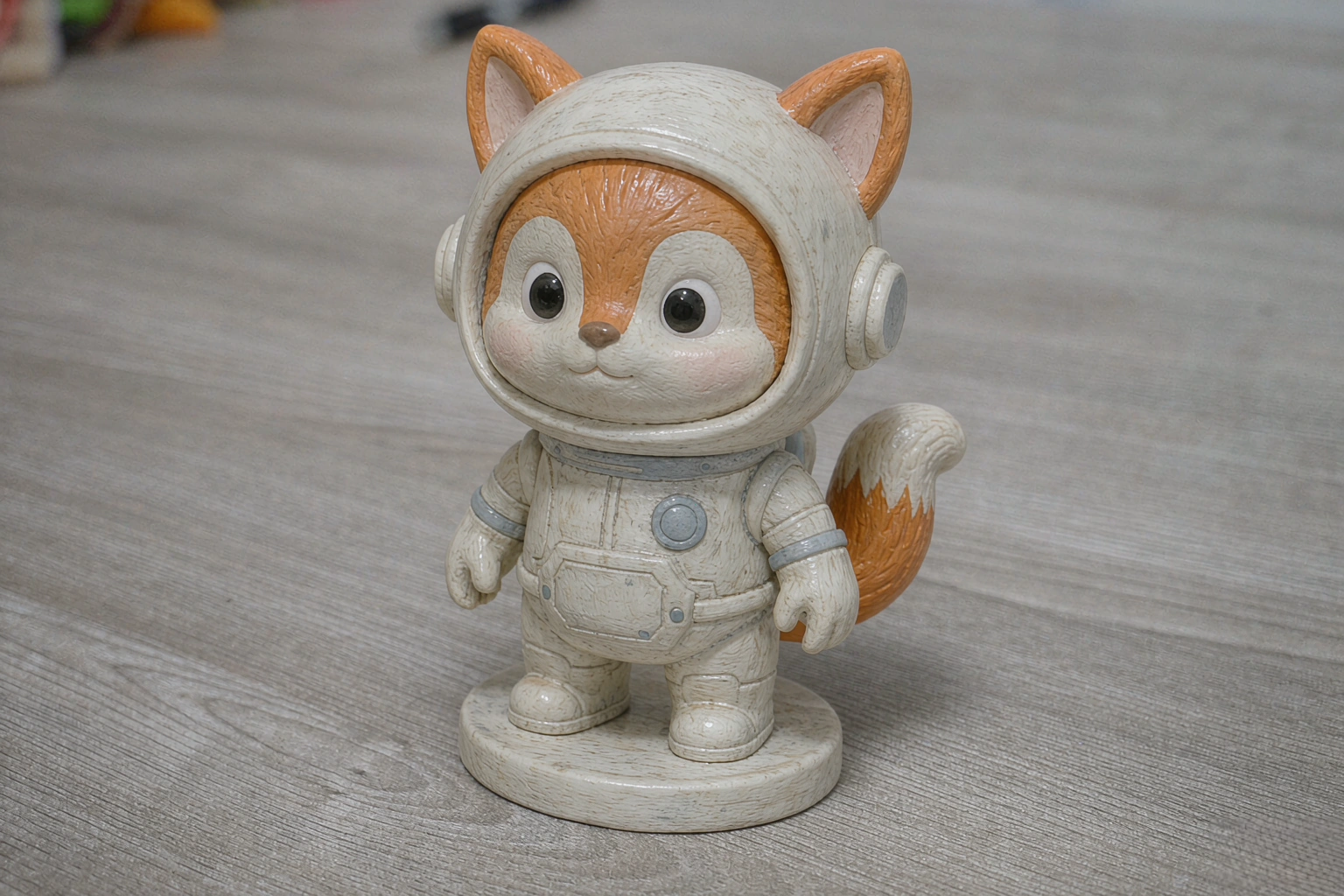
Some resin figures need careful handling, but “resin” is too broad a category for one durability rating. Smooth-On describes TASK 9, a urethane casting resin, as suitable for impact-resistant tooling and durable reproductions. [3] That does not establish the performance of another resin or of your assembled figure. Request data for the proposed material and review the parts most exposed to handling or transit damage.
For either material, review the assembled figure, base and packaging together. Mark unsupported projections, joint fit and the surfaces that rub against the insert. Ask for a documented check using the proposed production construction and agreed handling or transit conditions. A data sheet describes a material; it does not prove that a particular thin accessory, glued connection or packed figure will survive its intended use.
Compare the project cost on the same basis
Ask for two itemized proposals using the same dimensions, quantity, decoration and packaging requirements. Separate modeling and samples, molds or other production setup, unit production, finishing, assembly, packaging and delivery. A resin casting route can still require molds; a lower tooling figure does not prove a lower total cost.
Ask how the quote changes with quantity per design and colorway, and what needs to be paid again on a reorder. Keep any differences visible: an alternative with a simplified accessory or different finish is a different specification. Use our guide to comparing custom plastic figure quotes to organize the written scope before comparing totals.
Compare the landed scope as well as the ex-factory product. Ask for the packed dimensions and weight of each proposal and confirm whether protective inserts, testing, freight and import charges are included, excluded or still unpriced. Do not treat a blank charge as zero. You can then judge whether a lower unit price still produces a lower comparable project total.
Keep minimum quantities, sample charges and delivery timing in the actual project quotation. This article does not assign a standard WEIMEI price, MOQ or lead time to either material.
Prepare a brief before requesting material proposals
Send the artwork or available 3D files, overall dimensions and the intended use. Include the target age group, destination market, quantity by design and colorway, desired feel, decoration and packaging. Mark the material questions that remain open instead of choosing a material solely to complete a form.
Request a written proposal identifying the material for each main part, the forming process and the sample needed to evaluate it. Confirm how substitutions and design changes will be approved. Treat the intended market and age group as inputs for the project's assessment; a material name alone cannot establish finished-product suitability.
Record what each sample approves
Keep a dated approval record with separate entries for shape, material, decoration, assembly and packaging. Note any differences between the sample and the proposed production specification. For example, a shape prototype with an unfinished base should not silently approve the final base material or paint. Close those items with the appropriate sample or written agreement before authorizing production.
Frequently Asked Questions
Does resin vs vinyl toys mean two completely different materials?
Not as a complete technical specification. PVC itself is supplied as a resin before compounding, while “resin figure” is often used to describe a cast product. Ask the supplier to identify the exact material and forming process on both sides of the comparison. [1]
Can one figure use different materials for different parts?
Ask the supplier to evaluate that option against the assembly requirements. A flexible accessory and a rigid base may have different jobs. Require a material proposal for each part and review the complete assembly before accepting the combination.
Does a 3D printed prototype approve the production material?
No. Record what the prototype is intended to demonstrate. Shape approval should be kept separate from material, finish and assembly approval when the prototype differs from production. Ask which remaining checks need a representative production sample.
Make the material decision traceable
Choose the proposal that meets the figure's intended use and preserves the design features that matter. Define the material and process, compare representative samples and price the same scope. Keep unresolved requirements visible until the supplier provides evidence or a revised proposal.
Discuss your figure material options
Share your design, dimensions, quantity and intended market with WEIMEI TOYS. Tell us which parts need flexibility, which details must stay unchanged and whether you are comparing PVC and cast resin options. We can use that brief to discuss the next development step.